

Design that does its homework
The critical first steps in building signage that performs for years.
It happens every semester. Students move, departments shuffle, and new spaces open before the old ones settle. Your signage has to keep up with all of it. Constant new construction, relocations, renovations, and program changes create a campus that’s always in motion. And long before the first sign goes up, choices about materials, color systems, messaging, and fabrication have already set the course for how well the system will work once thousands of people begin relying on it.
Those early decisions aren’t theoretical. They directly affect how well the system adapts to changing space assignments, how consistently it can be extended across new buildings, and how well it preserves the school’s identity as the campus grows. After all, signage is so much more than a facilities decision. It’s a strategic brand decision that’s central to the student experience. And your earliest design choices determine whether your system endures for a semester or for a decade.
KEY CONTRIBUTOR:
Christopher Phillips
Director of Engineering
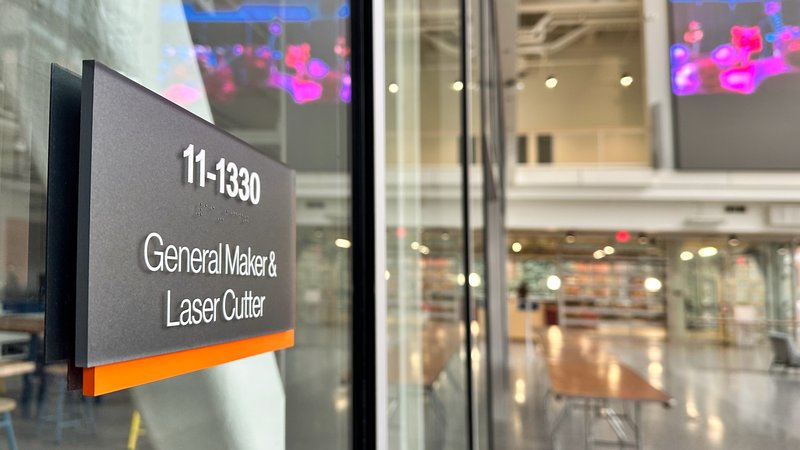
Here are three early considerations that reliably determine how well a campus signage system performs once it’s out of the design phase and living in the environment.
1. Design campus signage that balances wayfinding and brand
Campus environments are visually dense by nature. Getting noticed and being understood takes effort. So, no matter its location or purpose, every sign should be expected to play dual roles; get people where they’re going and build the institution’s brand.
One prominent East Coast university was looking to do exactly this as it prepared to unify wayfinding across several new academic and research facilities. Early creative decisions had to support a refreshed brand while also helping first-year students move confidently through unfamiliar buildings.
For signage to support a well-designed wayfinding strategy, visibility, legibility, and clarity are essential. That may sound simple, if not obvious. But the expertise and effort required to do so with aesthetic finesse that expresses brand while it also complements the interior design, architecture, and grounds should not be underestimated.
That’s why the strongest signage systems strike this balance early. They ensure that the wayfinding objective and creative expression translate across every sign type, scale, and location. A design approach that looks compelling in a rendering must also hold up in crowded hallways, high-glare atriums, and complex building footprints. If the design intent cannot be executed consistently across real campus conditions, it loses impact quickly.
The most effective sign system guides movement intuitively as it also reinforces institutional identity. When design decisions align how people use the campus with the university’s brand, wayfinding becomes more natural and image becomes more unified.

2. Maintain consistency across new and existing campus buildings
Cohesion has never been more important in higher education signage. Campuses are built over decades, often in multiple architectural eras, with departments moving as space needs shift, not to mention institutions with an expanding geographic footprint. Without careful planning and design standards, the signage system can easily fracture — one building uses different materials, another suffers off-standard color interpretation or worse introduces a new color palette, and a temporary renovation solution becomes a disruptive outlier.
For that same East Coast university, this issue came into sharp focus when a new STEM complex opened beside two historic halls. Maintaining continuity across century-old brickwork and contemporary glass-and-steel construction required consistent materials, message styles, and color interpretation. Ah, alignment!
Early coordination prevents this. A system built for institution-wide consistency helps students link buildings conceptually, even as they move between structures built decades or centuries apart. It ensures that new construction blends seamlessly with existing facilities. And it establishes a recognizable rhythm of typography, materials, and message that becomes part of the institution’s brand and visual language.

3. Choose durable, cleanable materials that withstand campus life
For both health and appearance reasons, cleanability is a practical challenge that campuses cannot ignore. Whether in an academic building, student center, or residence hall, an interior sign can be in the path of thousands over any given week. That traffic exposes signage to contamination and grime. Exterior signage faces its own set of challenges. Everything from sun, rain, and snow to lawn clippings and winter salt drive the need for cleanability.
In the case of the East Coast university, cleanability quickly became a decisive factor. Exterior signage had to withstand harsh winters, heavy student foot traffic, and constant exposure to salt and debris—making material selection and protective finishes essential considerations.
Signs that are not designed for the cleaning driven by these conditions age quickly. Finishes dull, colors fade, surfaces scratch, adhesives may fail, and mounting systems loosen. And if these issues necessitate replacements and those replacements don’t match the original spec, the inconsistencies become even more noticeable.
Thoughtful material selection combined with well-engineered manufacturing and installation methodology prevents these issues. Selecting substrates that resist abrasion, finishes that tolerate repeated cleaning, and construction methods that maintain stability over time ensures the system continues to look intentional long after installation. Cleanability is not simply a health and maintenance concern — it’s a design requirement that affects the long-term perception of the campus environment.
Build a system that adapts as your campus grows
The first phase of a signage project is never the last. New academic spaces, reconfigured student services, expanded residence halls, and program relocations require updates year after year. When signage standards are rooted in real-world conditions and brand expectations, these updates are more consistent, cost-effective, and aligned with the campus identity.
A system built for these realities doesn’t need to be reinvented every time a department moves or a building expands. It simply adapts. And because the early decisions were made, the system stays clear, connected, and clean across every stage of the campus’s evolution.
A campus that changes constantly needs signage that can keep up with it. By grounding early choices in how the environment truly functions and the brand is expressed, institutions create systems that work beautifully on day one—and stay reliable for years to come.
Our work in education

American University
From lobbies to study lounges, American University transformed its campus experience through a cohesive signage and graphics strategy. By pairing clear wayfinding with layered, branded visuals, AU created spaces that are not only easier to navigate but also richer in personality and identity – bringing a sense of place to every corner of the campus.

Towson University
Towson’s Facilities team partnered with Takeform in 2019, looking for a more cohesive approach to signage. What stood out was a design+build process that brings strategy, design, and fabrication together – making it easier to move from idea to implementation. The result is a more streamlined experience – and signage that works as part of a larger system.

University of Houston
When the University of Houston Clear Lake campus needed a total replacement of their aging exterior signage system, they knew it would be no small task.
