
Fayetteville High School
Fayetteville, AK
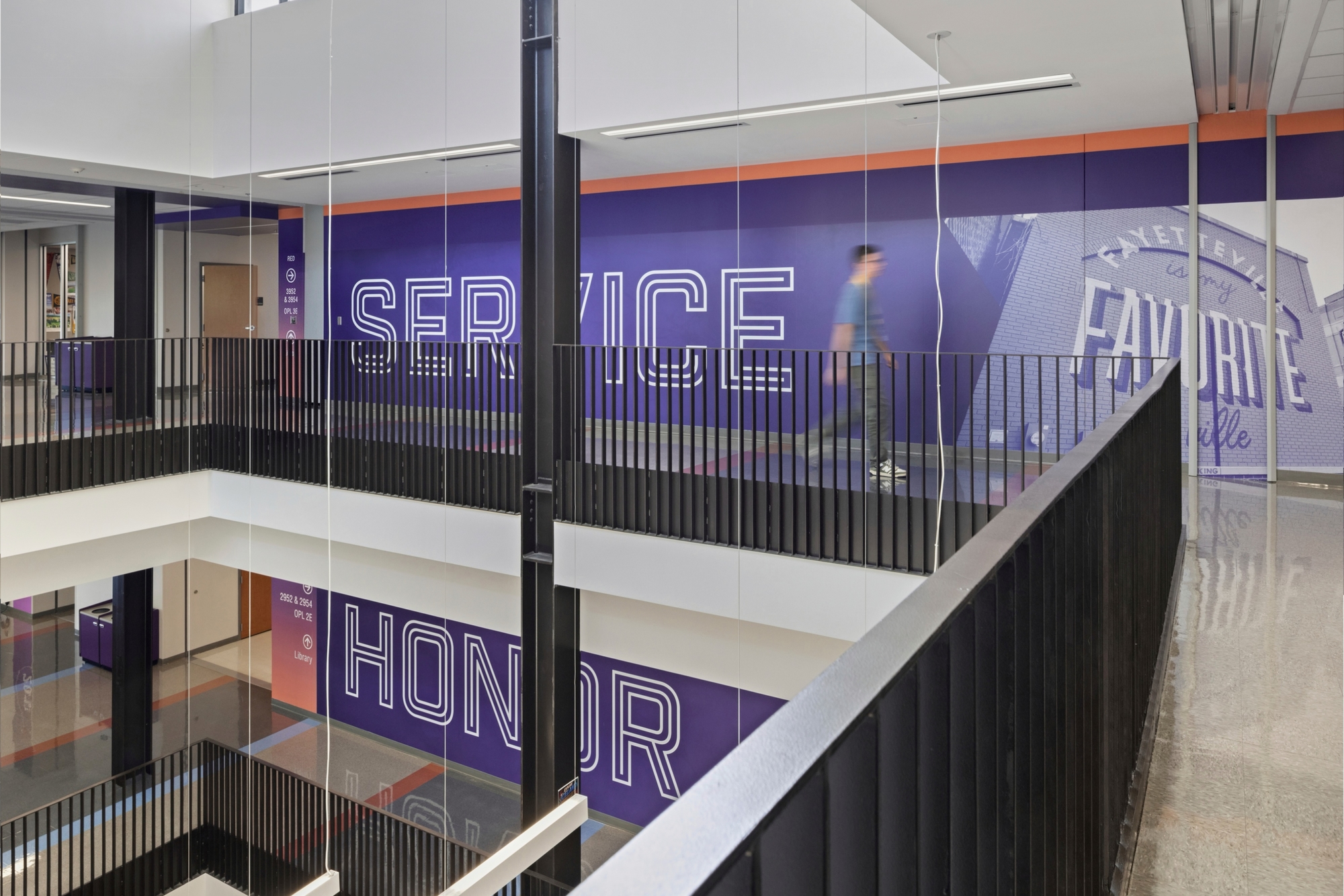
At Fayetteville High School, a series of interior renovations created an opportunity to rethink how signage and experiential graphics could work together to bring greater clarity and character to the existing environment.
Working alongside Fayetteville Public Schools and Hight Jackson Associates, Takeform helped develop an integrated wayfinding program that uses color, photography, and architectural surfaces to guide people through the building. The system creates recognizable visual cues that make the school easier to understand while reinforcing its identity and connection to the Fayetteville community.
LOCATION
Fayetteville, AK
PRODUCTS:
OTHER CONTRIBUTORS
Hight Jackson Associates
Let the environment do the talking.
Rather than relying solely on traditional directional signage, Takeform used the building's walls, corners, and glass surfaces as opportunities to communicate.
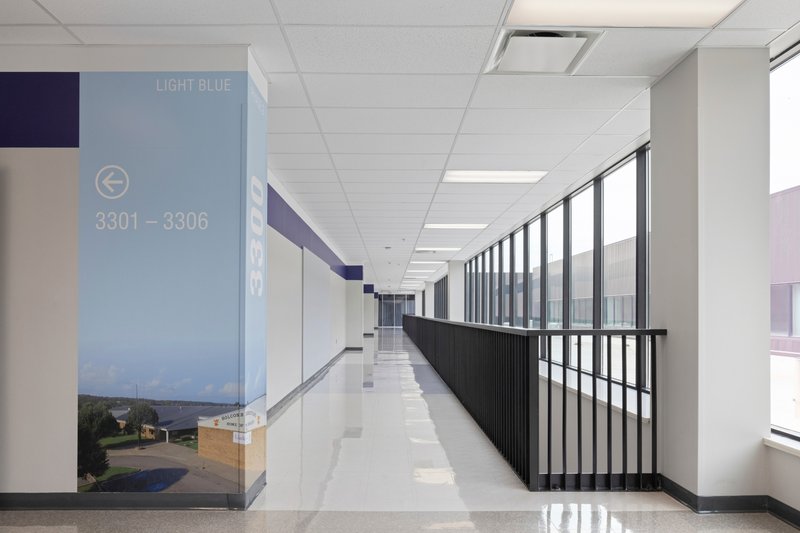
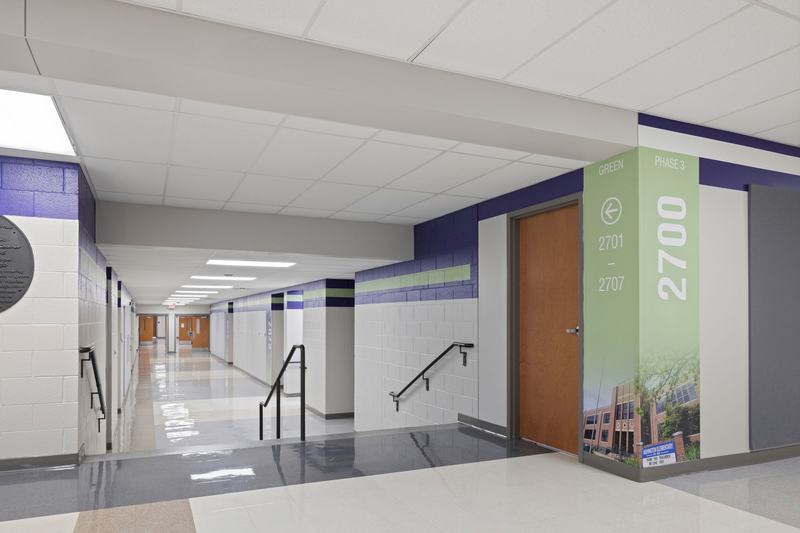
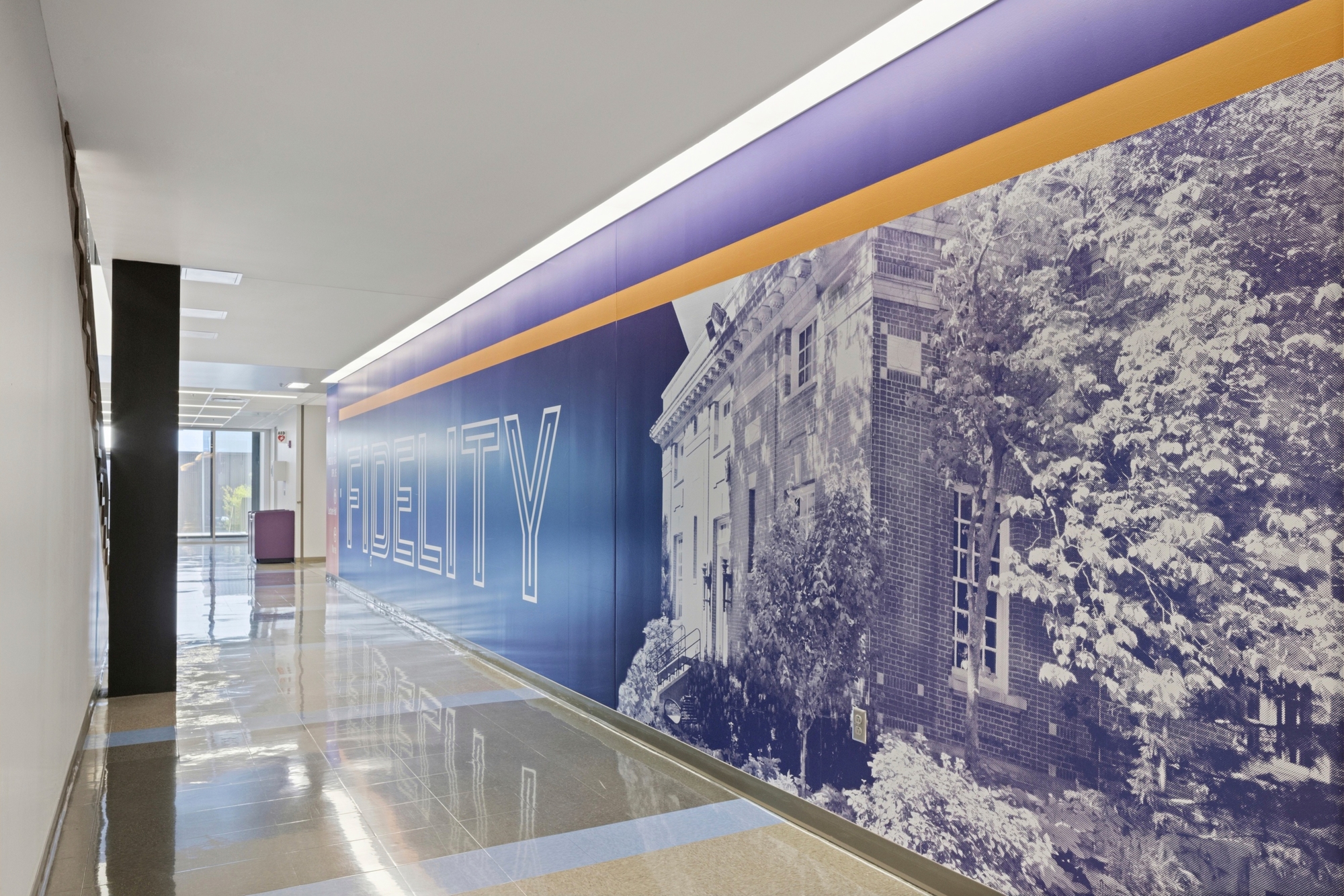
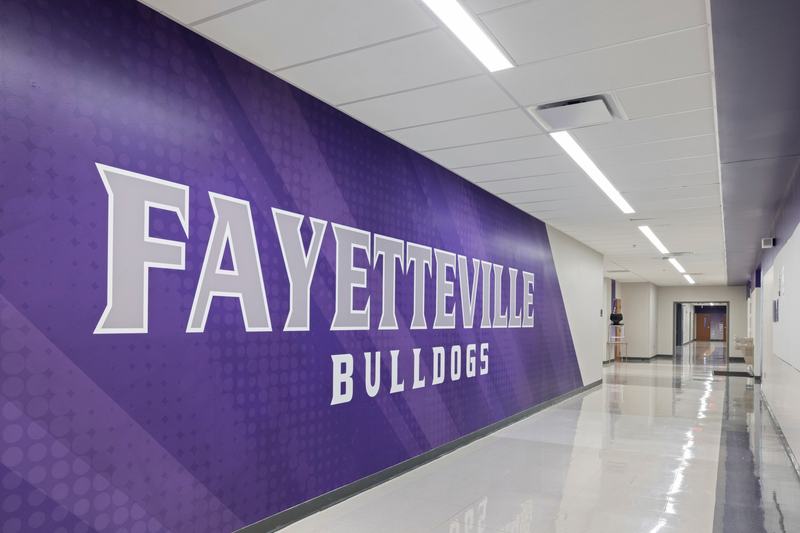
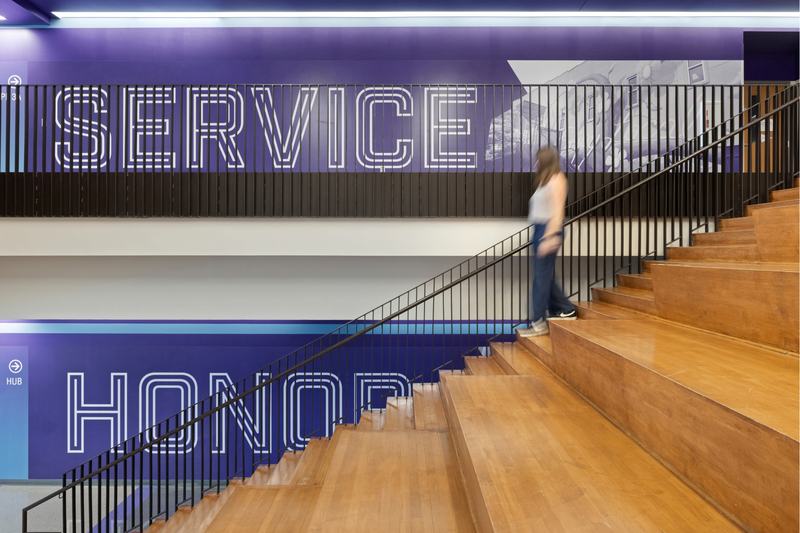
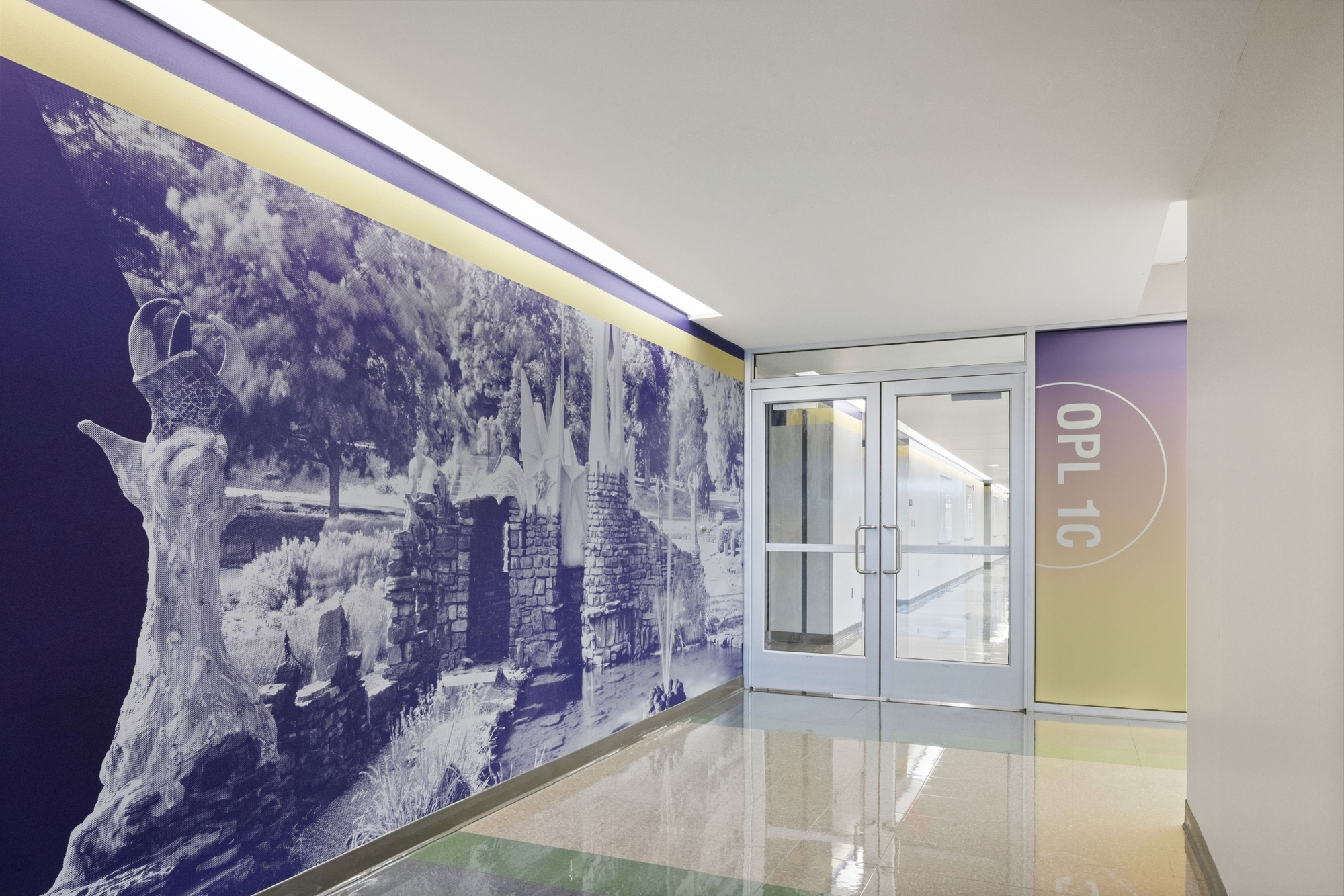
Custom Amplify wallcovering combine large-scale photography, corridor numbers, and directional information into cohesive graphics. Color helps distinguish different areas, while imagery provides landmarks that make locations easier to identify and remember.
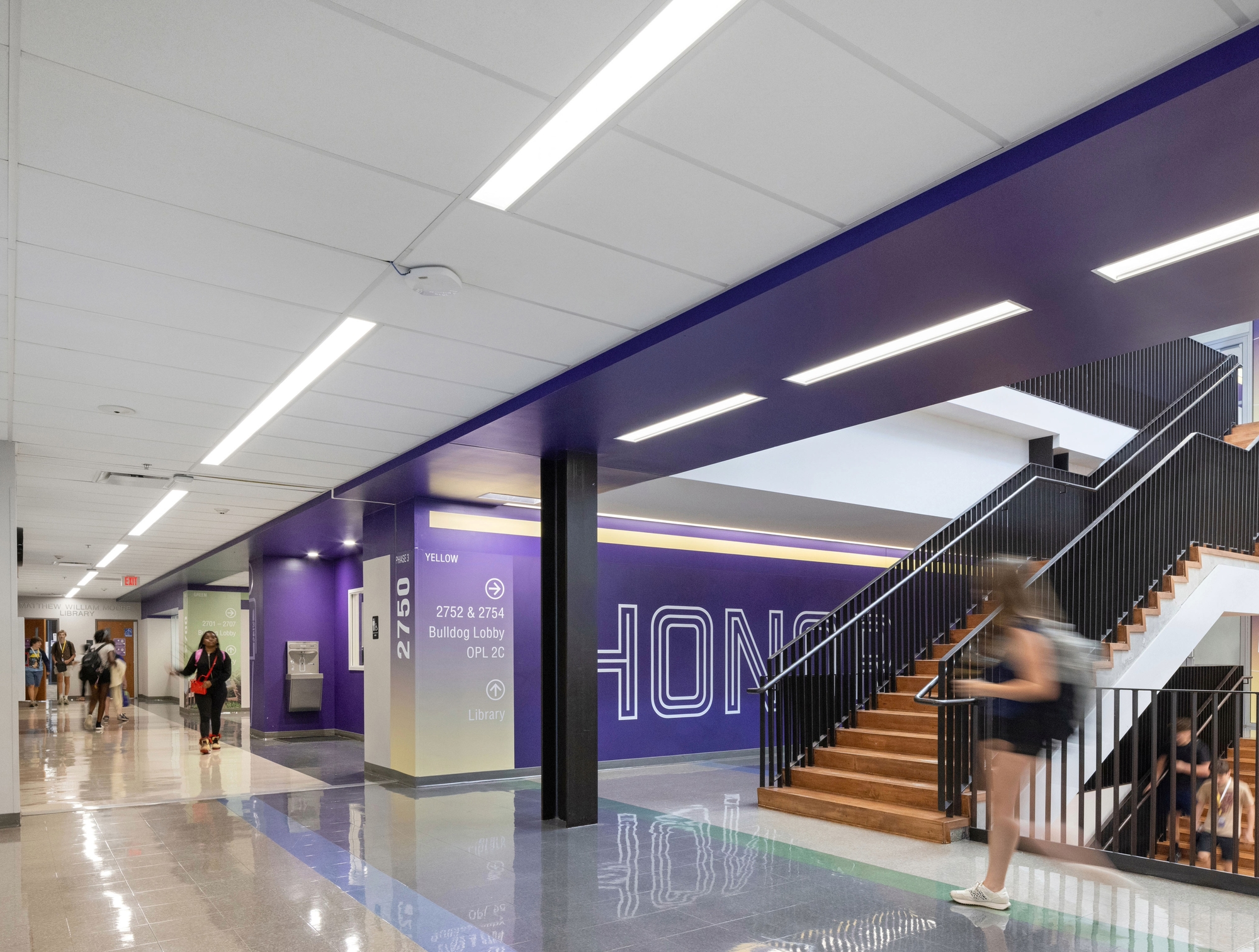
The system is designed to work from multiple directions. Coordinating imagery and identifiers at both ends of corridors creates consistency, while graphics wrapping around corners carry information through transitions in the school.

Designed for the people who use it.
Even the most thoughtful design needs to respond to the people moving through a space. At Fayetteville High School, that meant looking beyond visual consistency to consider how different students experience their environment.
One meaningful adjustment came in the east corridor, where many students receiving special education services attend classes. Rather than following the original gray palette, the team introduced a more distinctive color to create a more easily recognizable visual landmark. The change added another layer of intuitive wayfinding, helping students identify familiar spaces and navigate with greater confidence and independence.
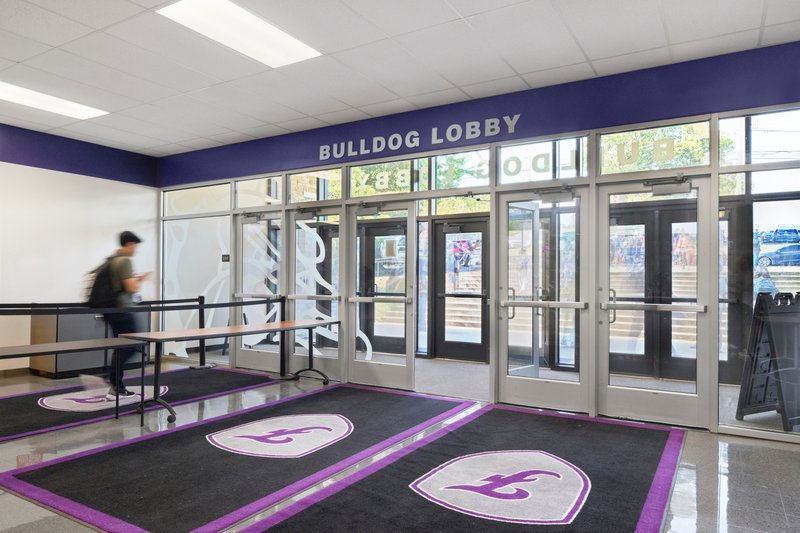
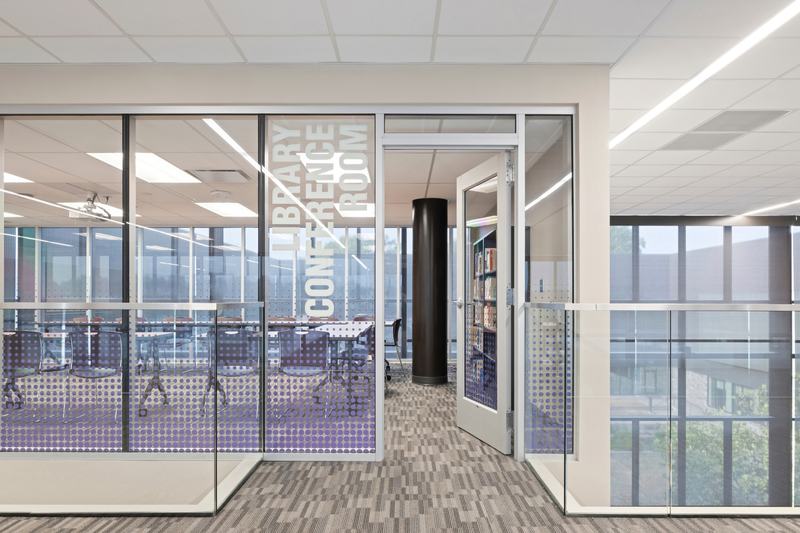
That same attention to user experience extends to the graphics on glass. In the Bulldog Lobby, Takeform designed Amplify window film that features the outline of the school’s mascot, reinforcing school pride while maintaining important clear sightlines. This approach carried through to other entrances and areas throughout the building, balancing visual impact with visibility.
Unmistakably Fayetteville
Experiential graphics bring Fayetteville's identity into the everyday experience of the high school. Local photography celebrates the surrounding community, while the school crest, Bulldog branding, and school colors create recognizable landmarks throughout the hallways. Together, wayfinding and graphics establish a cohesive design language that helps people find their way while strengthening their connection to the school.
Making it work in the real world.
Integrating graphics into an existing building comes with challenges. Every application of Takeform products needed to account for the architecture already in place.
Existing classroom signs, recessed doorways, painted stripes, and colored floor tiles all influenced graphic placement and composition. What worked on paper also had to make sense in the context of the hallways themselves.
Takeform worked closely with architecture firm, Hight Jackson Associates, and school representatives to develop layouts, verify dimensions, and refine details throughout the process.
Color coordination was particularly important. To ensure the printed wallcovering worked alongside newly painted surfaces, Takeform supplied physical swatches that were reviewed onsite against the actual wall colors. Photography was also evaluated for resolution, orientation, and suitability for reproduction at architectural scale.
A more connected experience.
At Fayetteville High School, wayfinding became more than a means of getting from one place to another. Architecture, experiential graphics, and school identity work together to create a unified experience shaped by the building and the people who use it. The result is a school where graphics help define spaces, guide movement, and reinforce a sense of place.
Our work in education
Francis Tuttle
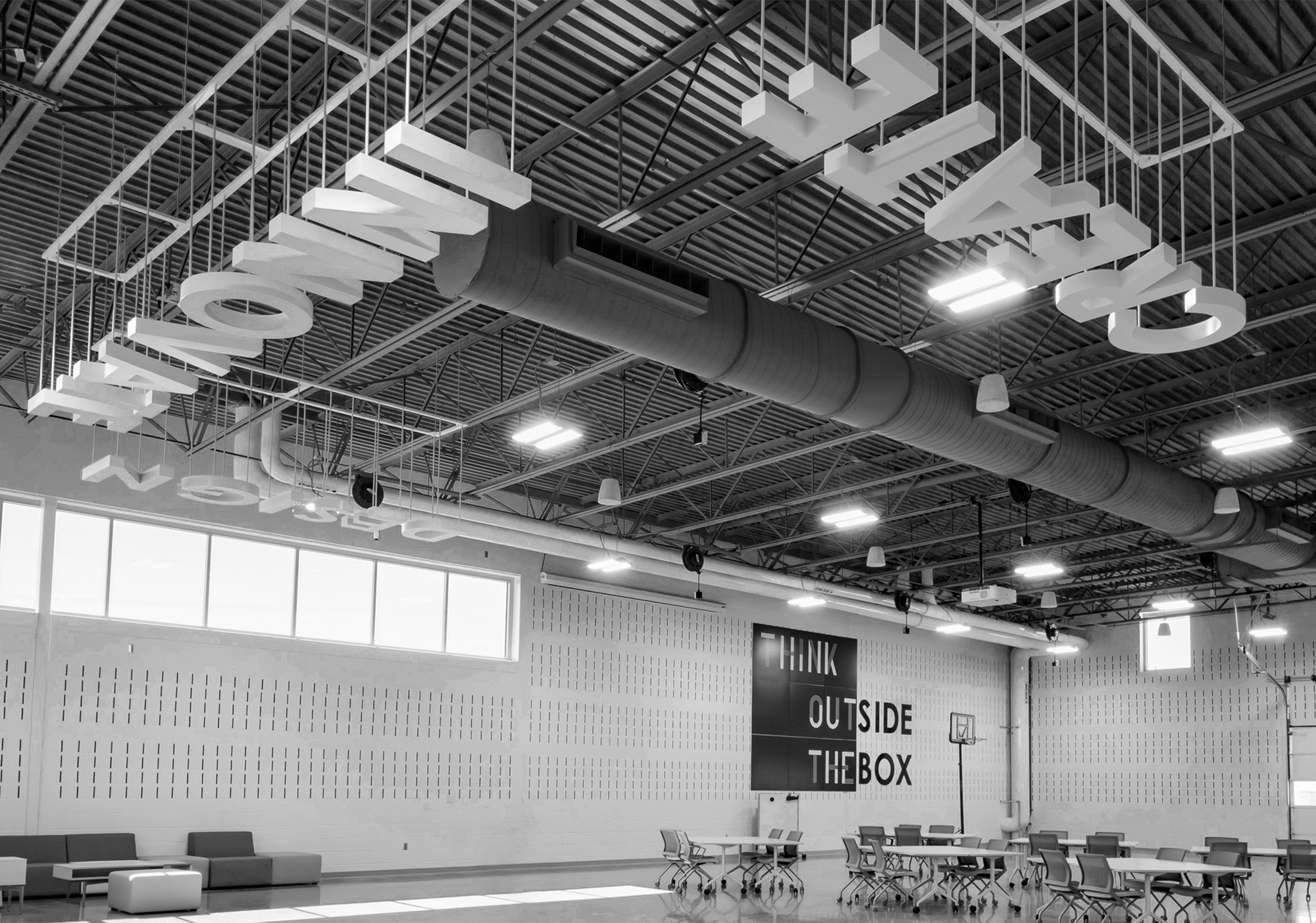
At Francis Tuttle Technology Center’s Edmond campus, Takeform partnered with A-Line Designs to bring a modern, collaborative energy to the 155,000-square-foot trade school. Through a phased approach, we delivered a cohesive graphic system where multiple products work together seamlessly—bringing ambitious design concepts to life.
Madrid-Waddington Central School
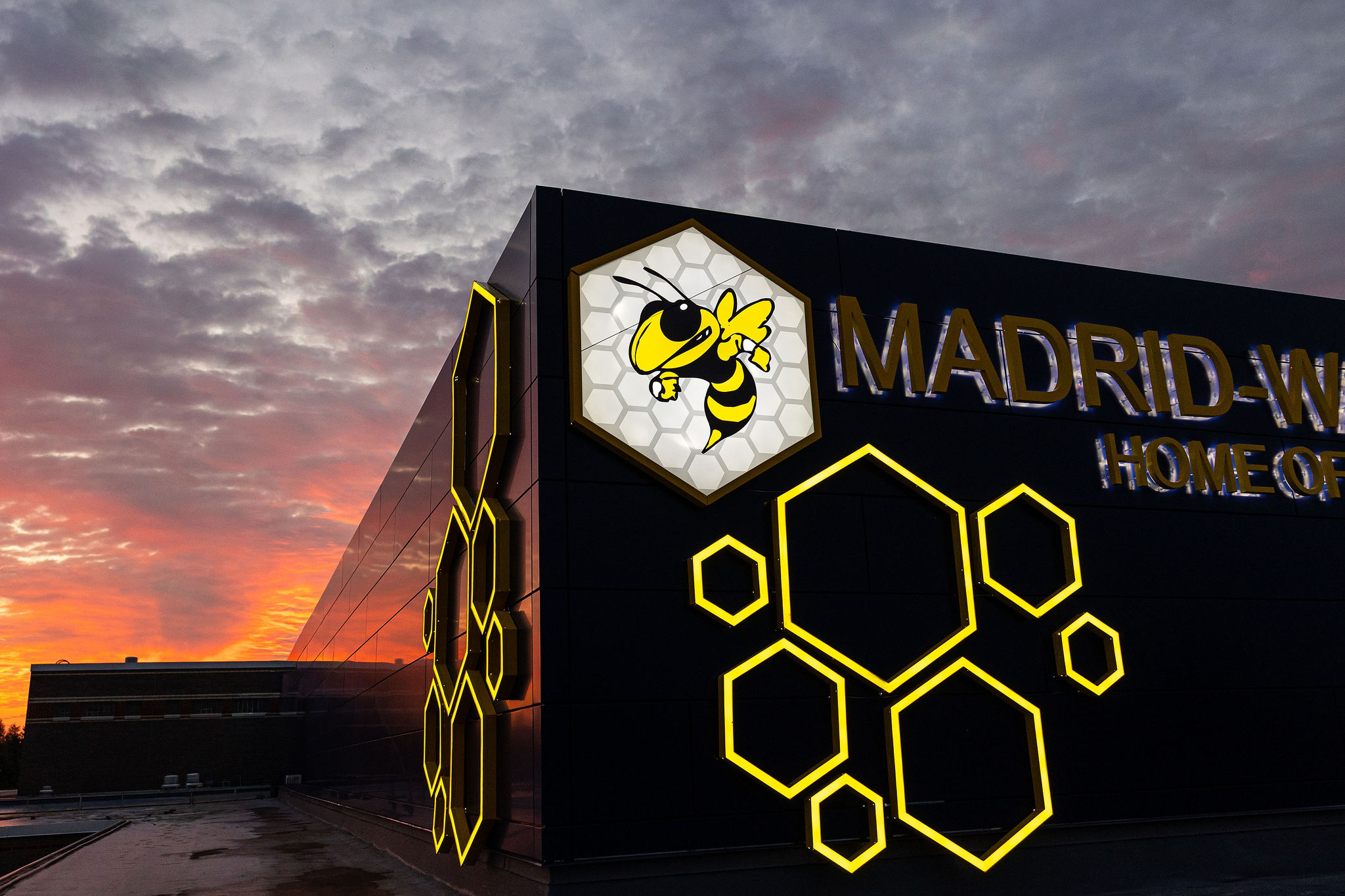
A closer look at how thoughtful coordination transformed exterior signage into a seamless part of Madrid-Waddington’s architecture.
Project Highlight: Richmond Heights High School
A bold mix of signage and experiential graphics turns school identity into an experience throughout Richmond Heights High School.